
Morocco’s Controversial Poultry Feed Experiment: Cannabis Instead of Antibiotics?
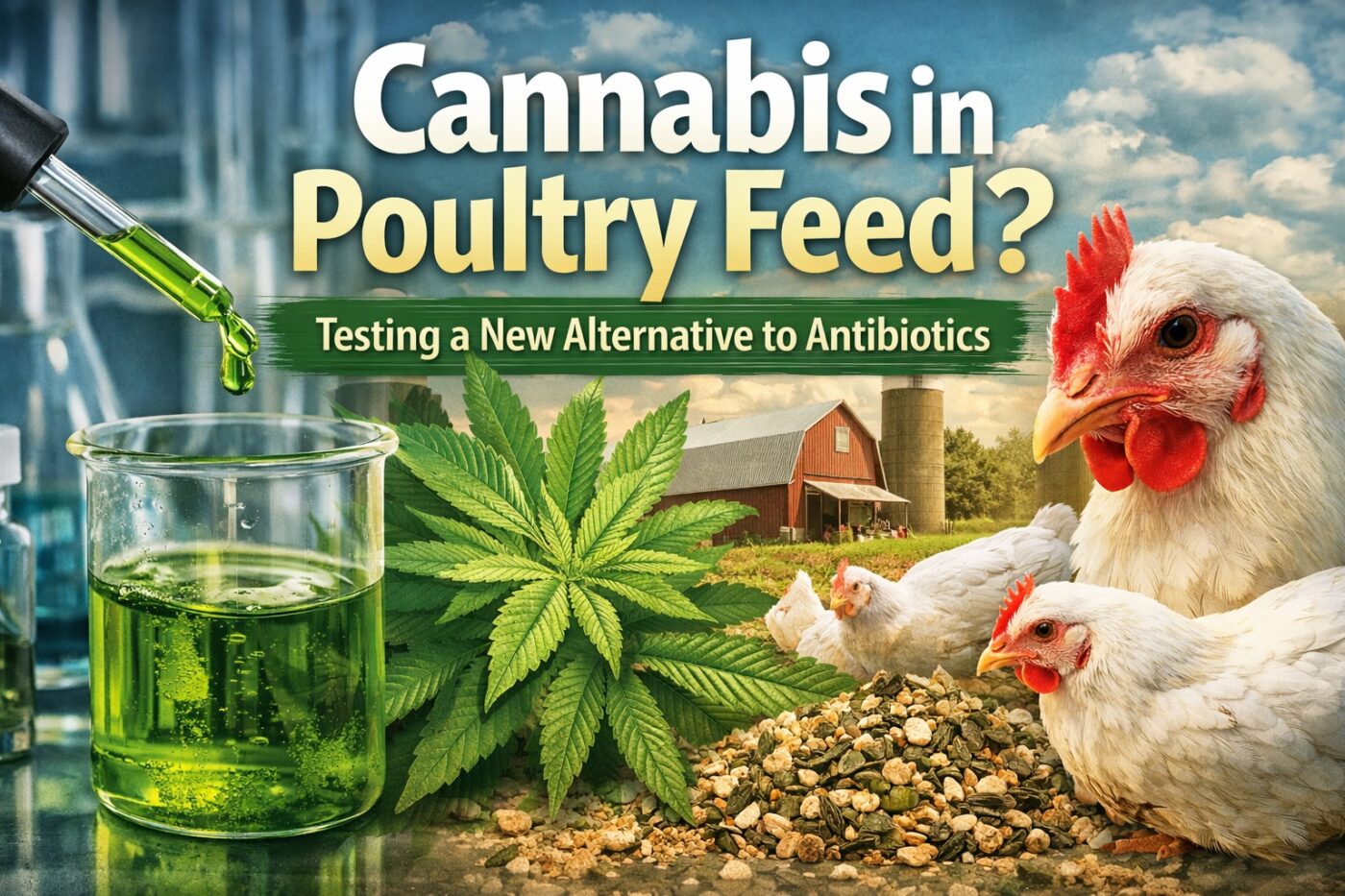
January 2026 — In a move that’s as bold as it sounds, Morocco has announced a government-backed research program to investigate whether cannabis derivatives can replace antibiotics in chicken feed. The project — set to run for 10 months — could disrupt traditional livestock nutrition paradigms and raise serious questions about agricultural innovation, food safety, and industrial cannabis use. Morocco World News+1
1. What Morocco Is Actually Testing
According to the Morocco World News report, the National Agency for the Regulation of Activities Related to Cannabis (ANRAC) has partnered with the Hassan II Institute of Agronomy and Veterinary Medicine to explore whether a cannabis-derived molecule can be integrated into poultry feed as an alternative to growth-promoting antibiotics. Morocco World News
Specifically:
- The program runs about 10 months and aims to develop commercial-grade feed formulas. Morocco World News
- The Veterinary Medicine Department will focus on how this compound affects gut health, immune response, and productivity in chickens. Morocco World News
- Beyond health outcomes, regulators want data to support any future industrial-scale use. Morocco World News
In other words: this isn’t a symbolic trial — it’s a policy-driven R&D effort with real biotech and supply-chain implications.
2. Why This Matters: Antibiotics vs. Cannabis in Feed
For decades, antibiotics have been used in livestock not just to treat disease, but to promote growth — meaning animals gained weight faster and more cheaply. But that practice has come under scrutiny worldwide because routine antibiotics in animal feed contribute to antimicrobial resistance, a public-health crisis. Poultry World
The key appeal of Morocco’s research is this:
Can cannabis — specifically cannabidiol (CBD) or similar molecules — reduce reliance on antibiotics by enhancing chicken immunity, improving gut health, and supporting growth without drugs that humans also use? Poultry World
It’s a high-stakes question. If successful, feed additives could improve animal welfare and potentially reduce antibiotic resistance risks. But success hinges on rigorous science, not hype.
3. Is There Any Precedent for This?
Interesting you ask — there is existing research.
A 2022 study from researchers in Thailand explored feeding cannabis material to broiler chickens. That trial found:
- No negative impact on growth performance
- Possible improvements in meat quality
- Some benefits tied to bioactive compounds in the plant material
But the mechanisms and results varied — and that research wasn’t large-scale or conclusive. internationalcbc.com
Meanwhile, other agricultural scientists are exploring other natural feed supplements — like mushroom waste — to reduce antibiotics in poultry systems. This tells us one thing: the field is wide open and experimental, not settled. Poultry World
4. The Real Scientific Questions at Play
Here’s where the rubber hits the road: Morocco’s researchers need to answer the following, and none of these are trivial:
- Does CBD or a related compound actually support chicken immune systems in real production conditions?
- Does it improve gut health enough to replace antibiotics as growth promoters?
- Are there any negative side effects on meat quality, food safety, or animal welfare?
- Can producers afford the feed? Will it scale commercially? poultrynews.africa
Economically and scientifically, this isn’t a slam dunk. Even if CBD has immune-modulating properties, translating that into consistent, measurable farm outcomes and commercial viability is hard.
Just because a natural compound shows effects in small studies does not mean it will solve the antibiotic problem at scale.
5. Regulatory, Market, and Legal Context
Morocco’s legal approach to cannabis has changed drastically.
- Cannabis was historically illegal for decades but remains widely cultivated informally. Wikipedia
- In 2021, the government legalized cannabis for medical, industrial, and cosmetic use, with the aim of replacing illicit markets with regulated ones. Wikipedia
- Thousands of cultivation and processing licenses have since been issued. Morocco World News
This poultry feed experiment fits into that broader strategy: find high-value, industrial uses for legal cannabis products. But it also comes with tension:
- Recreational use is still illegal and controversial. Morocco World News
- Critics worry that expanded cannabis applications could indirectly encourage illicit markets. Morocco World News
6. Practical Takeaways for Farmers and Industry Stakeholders (A Forward-Looking View)
From a practical agricultural standpoint, Morocco’s initiative reflects something many producers and researchers already understand: biological systems respond best to biologically intelligent inputs, not blunt pharmaceutical tools.
Plant-derived compounds are not new to animal agriculture. Garlic extracts, oregano oil (rich in carvacrol and thymol), neem, yucca, and other botanicals have been studied for decades for their antimicrobial, antioxidant, and immunomodulatory properties. In fact, oregano-based feed additives already have peer-reviewed data showing reductions in pathogenic bacteria, improved gut morphology, and comparable growth performance to antibiotic growth promoters in poultry.
Cannabis simply represents the next logical extension of this trajectory.
Key takeaways for producers and stakeholders:
- This is not “stoner science” — it’s a structured attempt to identify functional phytochemicals that support gut health and immune resilience.
- Botanical feed additives work via multi-pathway modulation, not single-target suppression. That’s a feature, not a bug.
- Reduced antibiotic reliance is increasingly a market advantage, especially in export-oriented and premium protein markets.
- If cannabinoids or related cannabis compounds demonstrate consistent results, they could join oregano and garlic as validated tools, not replacements for good management, but complements to it.
For farmers, the long-term opportunity isn’t novelty — it’s resilience, reduced regulatory pressure, and more biologically aligned production systems.
7. Bottom Line: A Necessary Evolution in Agricultural Science
The real story here isn’t cannabis.
It’s that agricultural science is finally being allowed to move beyond a 20th-century pharmaceutical mindset — one that treated living systems as problems to be suppressed rather than ecosystems to be supported.
Antibiotics work, but they are a crude solution. They flatten microbial communities, drive resistance, and create downstream consequences that regulators, producers, and consumers are now forced to reckon with.
Botanical compounds — including garlic, oregano, and yes, cannabis — operate differently:
- They modulate rather than dominate
- They act across multiple biological pathways
- They are inherently more compatible with complex gut microbiomes
Morocco’s project signals a broader realization: the future of animal nutrition lies in functional biology, not chemical shortcuts.
If this research succeeds, it won’t “replace antibiotics” overnight — and it doesn’t need to. Even partial substitution would represent a meaningful advance in animal welfare, public health, and sustainable agriculture.
In that sense, this initiative isn’t radical at all.
It’s overdue.